
Alaska Design Collaboratory
Project Context
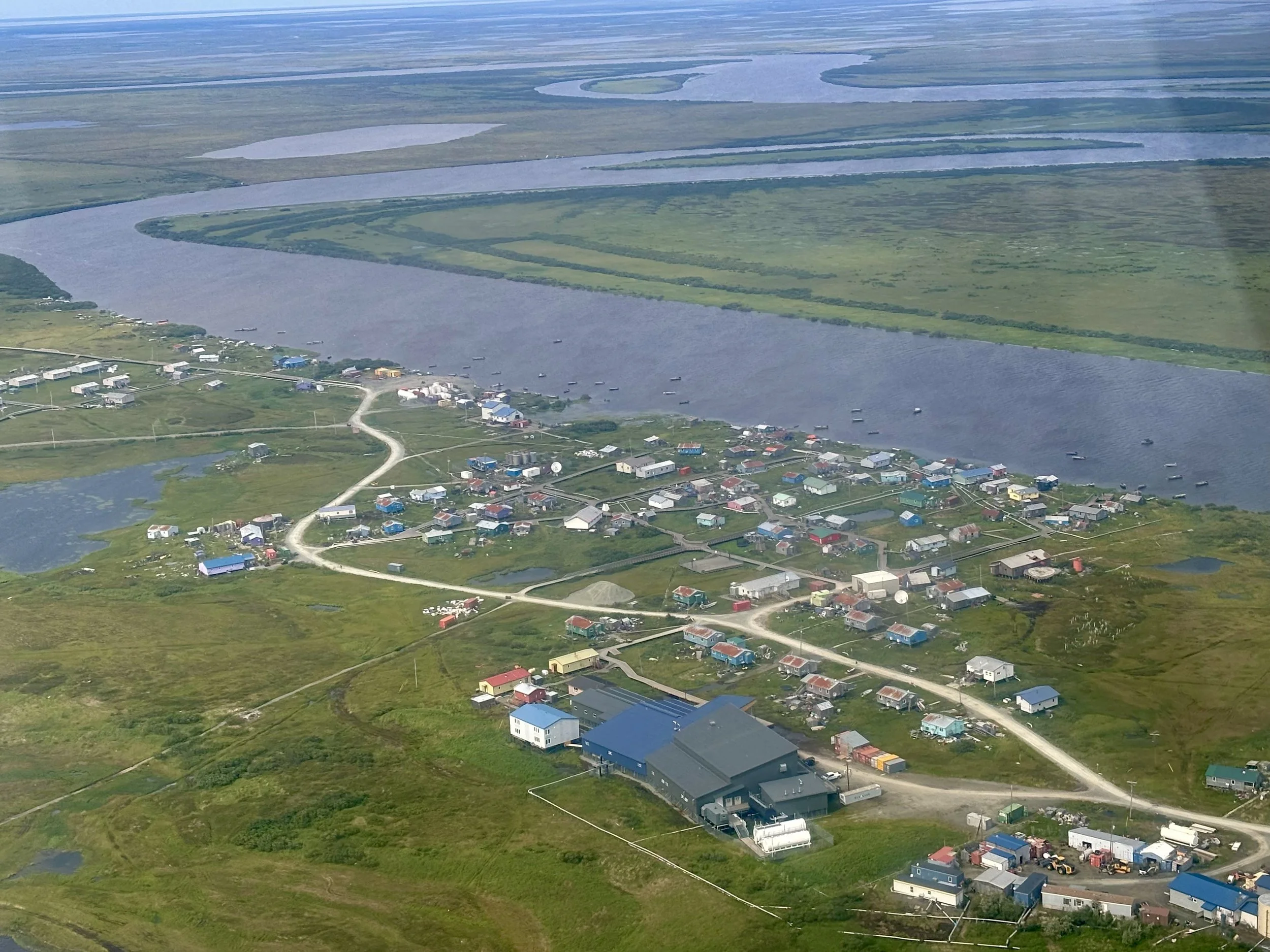
The Alaska Design Collaboratory is a collaborative research initiative between Virginia Tech, Portland State University, and Colby College working with the Cold Climate Housing Research Center and community partners in the Alaska Native villages of Quinhagak and Unalakleet. Together, the team is exploring new approaches to supporting communities facing the accelerating impacts of climate change, including erosion, flooding, permafrost degradation, housing insecurity, and, in some cases, displacement from their ancestral homelands.
Rather than designing predetermined architectural solutions, the project asks a different question: How can design create the conditions for communities to lead their own adaptation planning?
The result is a collaborative design methodology that centers Indigenous knowledge while integrating technical expertise through a family of participatory design tools. Developed through ongoing collaboration with community members, the methodology transforms adaptation planning from a primarily expert-driven process into one that enables residents to identify challenges, explore alternatives, build consensus, and access technical resources while remaining grounded in local knowledge, lived experience, and community priorities.
The project includes complementary tools that support different stages of the decision-making process, including cooperative planning games, augmented reality landscape modeling, scenario planning activities, and analog and digital resource guides. While each tool addresses a specific aspect of climate adaptation, together they form an integrated framework that supports community-led planning, relocation, sheltering in place, and long-term resilience.
The innovation of the Alaska Design Collaboratory lies not in any single tool, but in the methodology that connects them. By creating multiple pathways for participation, the project enables people of different ages, experiences, and technical backgrounds to contribute meaningfully to decisions about their communities' futures. The methodology strengthens local decision-making capacity, fosters collaboration between Indigenous communities and technical experts, and offers a replicable model for community-led climate adaptation grounded in Indigenous knowledge and cultural continuity.
Project Partners
Quinhagak, Unalakleet, Portland State University, Virginia Tech, Colby College, Cold Climate Housing Research Center (CCHRC)
Location
Alaska [Quinhagak, Unalakleet]
Participatory Tools
Relocation Board Game
The Relocation Planning Board Game is a cooperative planning exercise that allows participants to collectively explore strategies for climate adaptation and relocation planning. Working within a geographically relatable but fictional community rather than their own village, participants encounter randomized environmental, social, and economic events that enable them to make collaborative decisions about where to relocate, what resources to prioritize, and how to respond to changing conditions.
By abstracting the experience from any single village, the game creates a safe environment for discussing complex decisions while revealing community values, priorities, and decision-making processes that can inform future planning efforts.
AR Sandbox
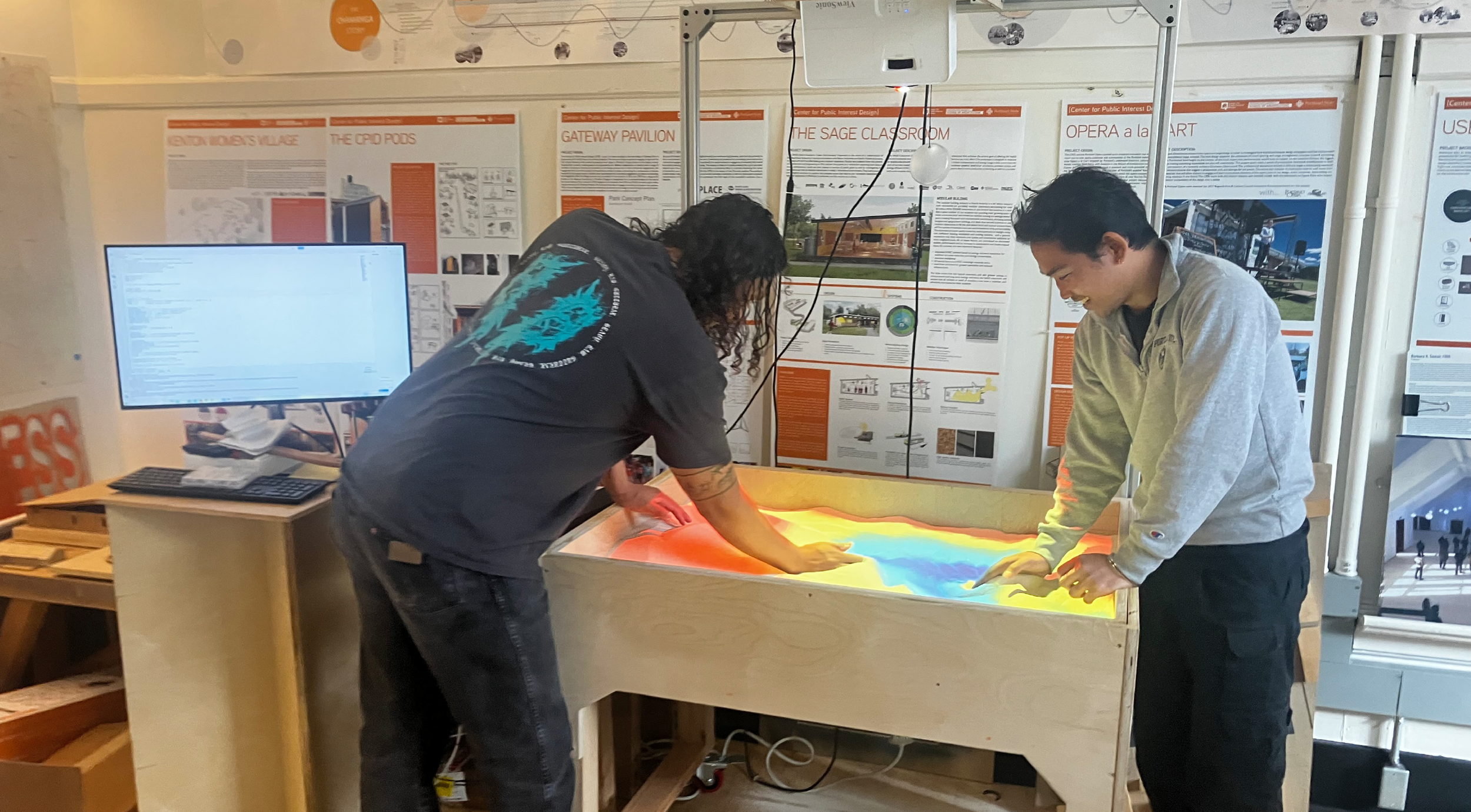
The Augmented Reality Sandbox transforms topographic modeling into a collaborative planning environment where participants can physically shape landscapes and immediately visualize the impacts of terrain, water, flooding, and infrastructure. Rather than relying solely on technical drawings or digital models, the sandbox creates a 3d visualization tool for community members to explore site selection, settlement patterns, environmental hazards, and future development scenarios.
The tactile nature of the tool encourages participation from individuals with diverse backgrounds and knowledge, creating a shared platform for conversation between community members, designers, engineers, and researchers.
Staging Area Scenario Building Game for Relocation Home Building
This project involves creating an interactive scenario-building game that explores the setup of staging areas for housing construction projects in remote Alaskan communities that are relocating due to the impacts of climate change. The game will help participants understand the logistical, environmental, and operational considerations involved in constructing 5, 20, or 50 homes under challenging conditions.
Arctic Entryway
Arctic entryways are transitional spaces that protect homes from extreme cold, reduce heat loss, and provide essential storage for equipment, outdoor clothing, and subsistence activities. By centering local knowledge and lived experience, this project helps ensure that entryway designs reflect the cultural values, daily practices, and evolving needs of Alaska residents. The visual planning model enables home occupants to communicate their living, storage, and functional needs while supporting an early-stage collaborative design process in which community members can explore design options, identify priorities, and refine concepts before advancing to detailed design and construction planning.
Community Kitchen [Food Processing Station]
The Community Kitchen and Food Processing Station is envisioned as a shared resource that supports the processing and preservation of fish and game that are central to subsistence living in rural Alaska Native communities. Beyond providing critical infrastructure, the project serves as an applied design opportunity through which the research team and community can better understand local practices, community dynamics, site conditions, material availability, and cultural priorities. The project uses the design process itself as a means of strengthening relationships and informing future approaches to technical support, housing, and community adaptation planning.
Mold Stories
Inspired by a community research assistant in Western Alaska who highlighted the need for research focused on the health impacts of mold in homes. The project collects stories from residents in remote communities to explore effective ways to share resources and remediation practices for addressing mold issues. The goal is to empower these communities by providing methods for mitigation and connecting them with experts for additional assistance
The Yukon-Kuskokwim Housing Resource Guide and Regional Directory Project
Designed to help navigate the complex network of home funding, design, construction, and maintenance in Alaska’s remote Yukon-Kuskokwim Delta region. In addition to housing resources, the project includes an alphabetized regional directory for the 48 communities in the YK Delta with contact information for entities in each. The 2026 guide will serve as a small-scale prototype of a larger, updateable online resource, which will be refined with Alaskan stakeholders. Printed copies will be distributed to communities and stakeholders.